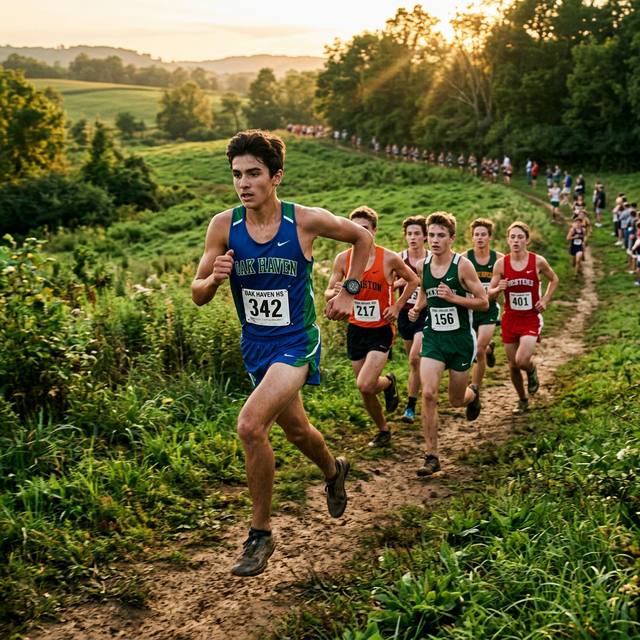
Cross-country and track are the entry points for a huge number of youth athletes, and they’re also the sports where wearable technology has the deepest impact. GPS pace tracking, training load management, and running dynamics data give youth runners and their coaches objective information that was impossible to gather cheaply just five years ago.
Here’s what to use in 2026, by athlete age and experience level.
Listing check: Amazon “kids GPS watch” and “youth running watch” titles mix Bounce-style location watches with Forerunner training watches. Confirm the listing is the running watch (pace/laps) or the kid-safety watch (location/messaging) you meant — they are not the same product.
Quick picks by age
| Age | Device | Why |
|---|---|---|
| 8–11 | Garmin Bounce | Safety GPS + basic activity, no phone required |
| 10–13 | Garmin Forerunner 45S | Beginner GPS running watch |
| 13–18 (recreational) | Garmin Forerunner 55 | Full GPS, training metrics, 2-week battery |
| 13–18 (competitive) | Garmin Forerunner 265 | Advanced metrics, HRV, training readiness |
GPS Watches
Garmin Forerunner 45S, Best Beginner Running Watch ($149)
The smallest, lightest Garmin running watch. GPS pace tracking, heart rate, basic training load, and Strava/Garmin Connect sync. The S variant has a smaller case diameter (39mm) appropriate for younger wrists.
For a first-year cross-country athlete who wants to see their pace live on a run, this is the entry point that won’t overwhelm them.
Garmin Forerunner 55, Best Overall for Teen Runners ($199)
The Forerunner 55 is the sweet spot for teen cross-country and track athletes. It adds:
- Suggested workouts based on your recent training
- Race predictor (estimated 5K, 10K, half marathon times)
- Training load and recovery time estimates
- Daily stress tracking (using HRV sensors)
- 2-week battery life
For a competitive teen training six days a week through cross-country season, the recovery time estimate is the most practically valuable feature, it gives coaches and parents language to talk about load management.
Garmin Forerunner 265, Best for Serious Teen Competitors ($449)
For teens 15+ who are competing at a high level (state-qualifying times, club running programs), the Forerunner 265 adds:
- HRV Status (daily readiness from 7-day HRV tracking)
- Running Power (estimates effort accounting for grade, wind resistance)
- Morning Report (sleep, HRV, training recommendation)
- Advanced training plans with auto-adjustment
- AMOLED display for improved GPS map readability
The 265 delivers genuinely useful data for athletes and coaches who are willing to engage with it. It’s overkill for recreational runners.
Heart Rate Monitoring
Garmin HRM-Pro Plus, Chest Strap for Accuracy ($99)
Wrist-based heart rate sensors are convenient but lose accuracy during intense intervals, exactly when a track athlete needs precise data. The HRM-Pro Plus chest strap captures accurate heart rate during 200m repeats and tempo work where wrist sensors lag.
For teen athletes doing structured interval training, pairing a Garmin watch with the HRM-Pro Plus provides genuinely reliable lactate threshold estimates.
Apps for Young Runners
Strava, Best Social Training App (Free/Premium)
Strava connects young runners with teammates and coaches through shared activities and segment leaderboards. The Relative Effort score provides a simple way to communicate training load. Many youth clubs use Strava for team coordination.
Parent note: Set accounts to private for athletes under 16. Strava’s heatmap features can share location data, configure privacy zones around home and school in settings.
Garmin Connect, Best Full Ecosystem (Free)
If your athlete uses a Garmin device, Garmin Connect is the companion app for detailed analysis. Coaches can use Garmin Training Center to share structured workouts directly to their athletes’ watches.
Running Form Aids
Garmin Running Dynamics Pod ($69)
Clips to the waistband and provides advanced running metrics that aren’t available from wrist sensors: vertical oscillation (how much the body bobs up and down, ideally low), ground contact time, and stride length asymmetry.
Consistent high vertical oscillation in a youth runner often indicates technique that wastes energy. A coach reviewing Garmin RPM data can use this to identify and correct form flaws.
Track Workouts: How to Use Your GPS Watch
The watch shouldn’t be the center of attention during practice. Specific uses that add real value:
Auto-lap by interval: Set the watch to auto-lap at 400m so splits are automatic. Review after, not during.
Heart rate zones during tempo runs: Building aerobic base at the right intensity requires staying in Zone 2 (conversational pace). HR monitoring helps young runners who tend to run everything at race effort.
After-season training load review: Looking at 3 months of data with a coach identifies whether training intensity and volume progression was appropriate.
What to Skip
- VO2 Max scores from consumer watches: Garmin’s estimated VO2 Max can be a useful trending indicator but should not be treated as a clinical measurement. Actual VO2 Max requires lab testing.
- Smart insoles: Expensive, fragile, and their running form metrics add complexity that most youth coaches aren’t using.
- Lap counters for track: A basic stopwatch with memory handles this for $20. Save the budget for GPS watches with better running metrics.
FAQs
What age should a young runner get a GPS watch? The Garmin Bounce (GPS safety + activity) is appropriate from age 6+. A dedicated running GPS watch makes most sense from age 10+ when runners are doing structured training with distance goals.
Does GPS work on an indoor track? No, GPS requires satellite signal (sky view). For indoor track, switch to accelerometer-based indoor run mode on your watch, which is less accurate but tracks approximate distance.
Should young runners use heart rate zones? For recreational youth runners under 12, heart rate zones add complexity without value, train on feel. For teen runners doing structured training, Zone 2 base building and threshold work are meaningful concepts a good coach can implement with HR monitoring.
Updated: March 2026 by Marcus Webb
We evaluate sports gear and fitness products independently. To learn more about our editorial standards, read our Editorial Policy.
Related Reading
How we evaluate: We combine manufacturer documentation, independent user feedback, and parent-focused criteria like safety, durability, ease of use, and long-term value.
Accuracy note: Pricing and product availability can change. Verify details on the retailer site before purchase.
Affiliate Disclosure: Sports Gadget Review is a participant in the Amazon Services LLC Associates Program. When you purchase through links on this page, we may earn a commission at no extra cost to you. Editorial recommendations are made independently.