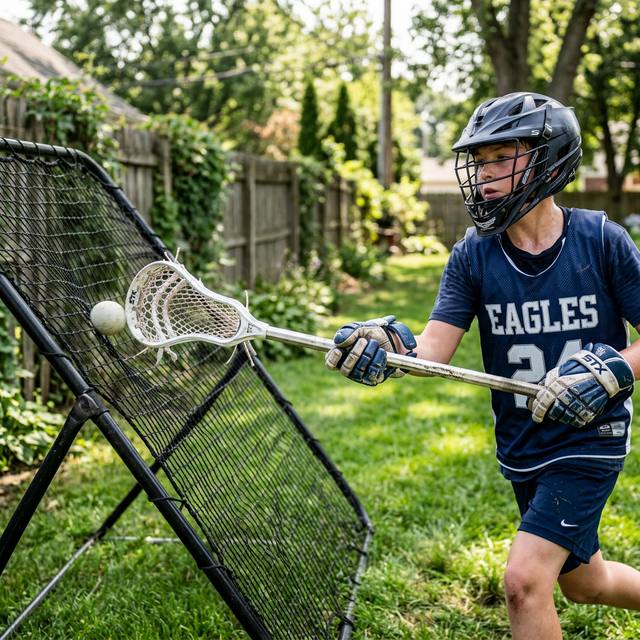
The cheapest lacrosse trainer is a brick wall. Coaches say “do your wall ball” because a concrete surface returns every throw and does not need a SKU. A rebounder, a bag of balls, and a 6×6 goal are what you add when the wall is not an option — or when you want an angle you can change.
This page is the home lax kit guide: rebounder vs wall, balls you will lose, backyard goals, and shooting targets. It is not a helmet or pad fitting guide. Contact protection for overlapping winter sports is on youth hockey safety gear. Multi-sport rebounder nets that Amazon also files under basketball live on basketball rebounders for solo practice.
Desk research: live Amazon titles (September 2026), manufacturer dimensions, and owner setup notes. Older copy on this URL named “Rukket” and “Champion Sports balls” on ASINs that were generic rebounders. Those labels are gone.
Listing check: Amazon “lacrosse rebounder” mixes a 4×6 / 4×7 angled bounce-back, a 6×6 goal with no rebound face, a soccer rebounder in a lax photo, and a basketball Solo Assist. Confirm the assembled face (4×6 vs 4×7 vs 6×6), that it is a rebounder and not a goal-only, and that the sport in the bullet list includes lacrosse — not just “volleyball / soccer.”
Who should buy this — and who should skip
Parents. If you have a concrete or brick wall that the HOA will tolerate, buy a dozen balls and a youth stick the coach already approved. Add a rebounder only when the wall is siding, windows, or nonexistent. A $150 net does not create a wall-ball habit.
Coaches. Buy balls by the dozen and one rebounder that stays at the field. Skip a shooting-target tarp until the roster can catch with both hands.
Skip first. Skip “elite” carbon shafts as a first cart. Skip a rebounder if the player will not do ten minutes of throws. Skip any listing whose photo is a soccer kick-back.
Wall first, net second
A flat concrete or brick wall at 5–8 yards is the default trainer. Wood siding and garage doors lose. If the only wall you have is siding, that is the rebounder justification.
A simple daily block — not a magic 500-rep prescription — is enough: 50 throws each hand, then a smaller set of ground balls. Volume without a catch is just noise. Weak-hand share matters more than a viral rep count.
Rebounders — read the size dropdown
The live listing at 4×7 lacrosse rebounder (B0F1SLWC1C) is a generic / Zealfeel-class multi-sport bounce-back: about 4×7 feet, several angle settings, target strap, stakes. It is not a Rukket-branded frame. Same aisle, different brand on the carton. Confirm whether the variation is 4×6 or 4×7 before you pay.
Search lacrosse rebounder if you want to compare Rukket, Champion, and other steel frames. Apply the same listing check: face size, angle hardware, and whether sandbags / stakes are included.
Buy it when there is no safe wall, or when you want skip-pass and ground-ball angles a wall cannot give.
Skip it when a wall already works, or when the “lax rebounder” is a 6×6 goal with a picture of a rebounder.
Balls — buy a dozen, expect to lose them
Search Champion Sports lacrosse balls dozen. You want NOCSAE-marked game-weight balls, not foam toys and not a rebounder kit that happened to reuse an old ball ASIN on this site. One ball is a lost-ball problem. A dozen is a session.
Backyard 6×6 goal — then a target, not before
Search SKLZ lacrosse goal 6x6. A generic “SKLZ Goal” search also returns soccer and hockey. Confirm 6×6 and lacrosse in the title. Folding backyard goals are for shooting once the player can throw to a wall cleanly.
A 6×6 lacrosse shooting target is a tarp with corner holes that ties onto a goal you already own. Goal not included. Listing photos that show a complete goal-plus-target as one price are usually two products.
Parent cart vs coach cart
Parent cart: wall or one rebounder, a dozen balls, the stick the league already uses. Stop. Do not add a goal and a target the same week.
Coach cart: balls in bulk, one rebounder that stays assembled, cones from the agility equipment kit. A target tarp is a station, not a personal SKU.
Hockey families shopping helmets and sensors should use youth hockey safety gear — that is pads, not wall ball. Team gadgets that are actually comms / scorekeeping live on the team gadgets hub. Training-aid browsing is on training aids.
Frequently Asked Questions
What age should kids start wall ball?
Once they can cradle without dropping the stick on every run — often around 7–9 with a youth-length stick. Soft tosses to a wall beat a rebounder that needs assembly.
Do lacrosse balls damage walls?
They mark and dent siding and garage doors. Concrete and brick are the point. If you only have siding, use a rebounder and stakes.
Stick skills or athleticism first?
At youth ages, catch and throw. A fast player who cannot complete a pass is still a turnover. Footwork tools can wait; they are on the agility kit page if you need them later.
Is a rebounder better than a wall?
A rebounder is better when you need a portable angle or you do not have a legal wall. A wall is better for volume and for “no setup” days. Most players who improve did the boring wall.
Related Articles
How we evaluate: We combine manufacturer documentation, independent user feedback, and parent-focused criteria like safety, durability, ease of use, and long-term value.
Accuracy note: Pricing and product availability can change. Verify details on the retailer site before purchase.
Affiliate Disclosure: Sports Gadget Review is a participant in the Amazon Services LLC Associates Program. When you purchase through links on this page, we may earn a commission at no extra cost to you. Editorial recommendations are made independently.