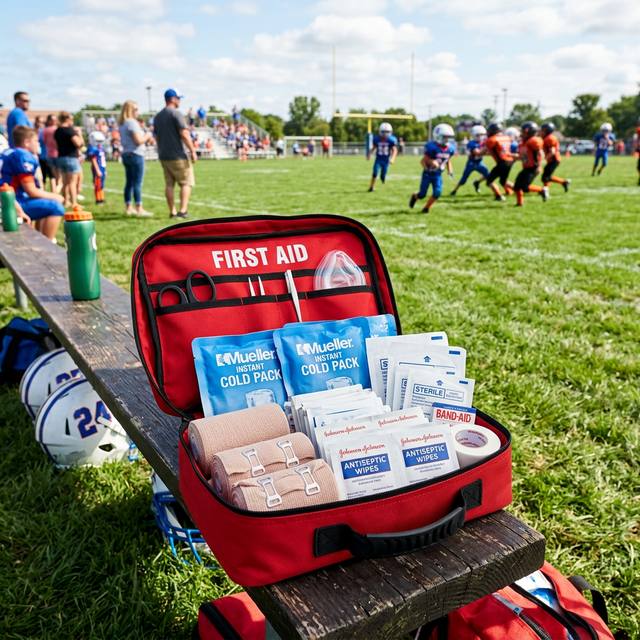
Every youth sports sideline should have a properly stocked first aid kit. Ankle sprains, cuts, and heat exhaustion can happen at any practice. Being prepared is the coach’s responsibility.
Top First Aid Kits for Sports Sidelines
| Kit | Best For | Items |
|---|---|---|
| Pac-Kit Athletic Kit | Full team sideline kit | 150+ |
| Swift First Aid Sports Kit | Compact team kit | 80+ |
| Johnson & Johnson All-Purpose | Budget backup | 140+ |
| Adventure Medical Kits Sport | Outdoor sports | 100+ |
1. Pac-Kit Athletic First Aid Kit, Best Full Sideline Kit
Designed specifically for athletic trainers. Includes pre-wrap, elastic bandages, skin lubricant, ice pack, eye wash, aspirin, and wound care. Hard case with removable tray.
2. Swift First Aid Sport Fanatic Kit
Compact soft-sided bag with 80 pieces. Fits in a coaching bag. Covers the most common youth sports injuries: blisters, abrasions, sprains, and cuts.
3. Disposable Ice Packs, Must Have in Bulk
Squeeze-to-activate, no freezer required. Every sideline kit should have at least 12. Use for acute sprains, bruises, and heat management.
4. Elastic Kinesiology Tape (KT Tape)
Pre-cut strips for ankle, knee, and shoulder support. Used by athletic trainers at every level. Easy for coaches to apply the basics after 10 minutes of YouTube learning.
What Every Sideline Kit Must Have
- ✅ Disposable gloves (at least 4 pairs)
- ✅ Instant cold packs (6 minimum)
- ✅ Elastic bandages (ACE wraps, 3-4 rolls)
- ✅ Antiseptic wipes and adhesive bandages
- ✅ Emergency contact card for each player
- ✅ AED location awareness (know where the nearest one is)
FAQs
Should youth coaches have first aid certification? Yes, most youth sports leagues require it. Red Cross Youth Sports First Aid is a 4-hour online course.
What’s the most common youth sports injury? Ankle sprains account for about 45% of all youth sports injuries, followed by knee injuries and shoulder strains.
Youth Sports First Aid: What Coaches Need to Know
The most common youth sports sideline situations, and how to handle them:
Ankle sprain (most common injury): Apply ice immediately, 20 minutes on, 20 off. Compress with an ACE wrap. Evaluate weight-bearing ability before returning to play. When in doubt, sit the athlete out.
Cuts and abrasions: Irrigate with clean water (carry a squeeze bottle). Apply antiseptic wipe. Cover with non-stick gauze and secure with athletic tape. Return-to-play is generally immediate once bleeding is controlled.
Heat-related illness: Move athlete to shade. Remove excess clothing. Apply cool wet towels to neck, armpits, groin. Offer water if fully conscious. Call 911 if athlete is confused, vomiting, or stops sweating.
Head impacts: Any suspected concussion = automatic removal from play. Do not return same day regardless of how the athlete feels. Refer to a physician before next participation.
Building a Sideline Kit by Sport
Different sports have different common injuries. Customize your kit accordingly:
| Sport | Add to basic kit |
|---|---|
| Soccer | Extra ankle tape, shin guard tape, ice packs |
| Baseball | Blister kit, finger splints, cold packs |
| Football | Extra cold packs, cervical spine protocol cards |
| Swimming | Sunscreen, goggle defogging spray, ear drops |
| Wrestling | Ear guard tape, cauliflower ear aspiration info |
Beyond the Kit: Preparation Matters Most
A kit is only effective if you know how to use it. Key preparedness steps:
- Know where the AED is at every facility you use, don’t assume one is nearby
- Have every player’s emergency contact on a card in the kit
- Know your league’s concussion protocol and follow it strictly
- Complete a youth sports first aid certification, Red Cross and NFHS both offer online courses
Recommended Additions to Any Kit
- SAM splint ($12): Moldable aluminum splint for finger, wrist, or ankleimmobilization
- Emergency foil blanket ($3): For cold exposure or shock management
- Latex-free disposable gloves (box of 100): Blood-borne pathogen protection
- Tweezers: For splinters and turf debris
- Small scissors: Medical-grade bandage scissors cut through athletic tape and clothing
FAQs, Extended
How often should a sideline first aid kit be restocked? After every use (replace used items same week) and full audit twice yearly. Check expiration dates on antiseptic wipes, wound closures, and medications annually.
Can coaches administer medication (Tylenol, ibuprofen)? Policies vary by state and league. Most youth leagues prohibit coaches from administering any medication without a parent present and signed medical authorization. Know your league’s rules.
Should I carry an EpiPen if I have allergic athletes? Only if trained in its use and if the athlete’s family has provided a prescribed auto-injector with written medical authorization. Coaches should know which athletes have known severe allergies before season starts.
Updated: March 2026, Marcus Webb
The most important kit addition isn’t a product, it’s the knowledge of when to call 911. Equip your sideline and train your judgment.
We evaluate sports gear and fitness products independently. To learn more about our editorial standards, read our Editorial Policy.
Related Reading
How we evaluate: We combine manufacturer documentation, independent user feedback, and parent-focused criteria like safety, durability, ease of use, and long-term value.
Accuracy note: Pricing and product availability can change. Verify details on the retailer site before purchase.
Affiliate Disclosure: Sports Gadget Review is a participant in the Amazon Services LLC Associates Program. When you purchase through links on this page, we may earn a commission at no extra cost to you. Editorial recommendations are made independently.