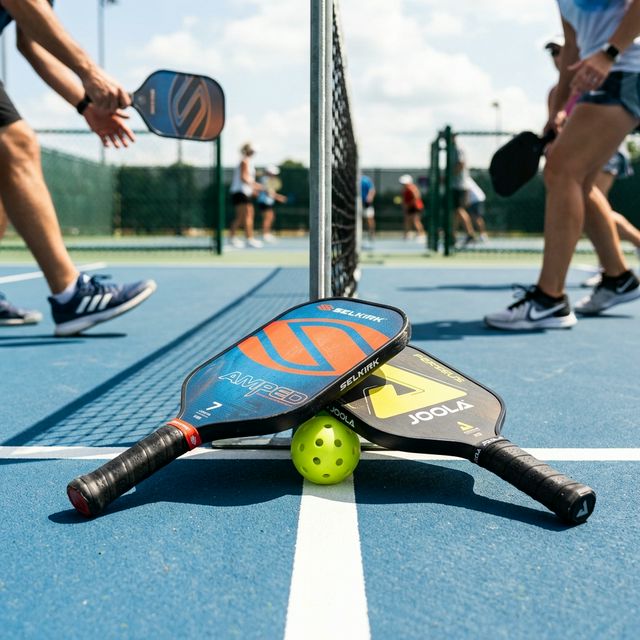
Pickleball grew 85% in youth participation in 2024 alone, making it the fastest-growing sport for players under 18 in the United States. Schools are adding pickleball to PE programs, courts are being converted from tennis across the country, and youth recreational leagues are forming in nearly every region.
If your child is getting into pickleball, or you want to get them started, here’s what you actually need in 2026.
Quick Picks by Age
| Age | Paddle | Why |
|---|---|---|
| 6–9 | Selkirk Amped Junior | Short grip, lighter swing weight |
| 10–13 | Gamma Sports Compass | Mid-weight, control-focused |
| 14–18 | Joola Ben Johns Hyperion | Adult performance paddle |
Best Youth Pickleball Paddles
1. Selkirk Amped Junior, Best for Ages 6–12 ($79)
Built specifically for smaller hands with a shorter grip circumference and 7.8 oz weight. The X5 polypropylene core gives soft touch shots appropriate for beginners learning dinking and volleying. Comes in multiple colors, kids actually care about this.
2. Gamma Sports Compass Paddle, Best Value ($69)
A 7.9 oz all-around paddle with a comfortable grip and textured surface for spin. For kids 10+ who are playing weekly but not competing, this is the best value option. Durable enough to survive school bags.
3. Joola Ben Johns Hyperion, Best for Teen Competitors ($149)
If your teenager is competing in tournaments or playing 4+ times per week, they deserve a serious paddle. The Hyperion CFS 16mm is what Ben Johns, the world’s #1 player, uses, but the standard Hyperion at this price offers the same carbon fiber face with excellent spin and control.
Starter Sets (Paddle + Net + Balls)
Niupipo Pickleball Complete Set ($69)
Includes two paddles, a portable net, and four outdoor balls. Excellent for families who want to try pickleball before committing to individual paddles. The net sets up in about five minutes on any flat surface.
Franklin Sports Junior Pickleball Set ($49)
Franklin is one of the most trusted names in youth sports equipment. Their junior set uses foam balls (better for beginners, softer on mis-hits) and child-sized paddles. Good first introduction for ages 6–10.
Balls: Indoor vs Outdoor
Youth beginners should start with outdoor balls (harder plastic, 40 holes) on an actual court, or foam balls for backyard and gym use. Note that tournament play uses outdoor balls, if your child is competing, practice with what they’ll play with.
Best youth outdoor ball: Franklin X-40 Pickleballs, the most commonly used ball in recreational and tournament play.
Do You Need a Net?
If you’re near public pickleball courts, you don’t need a portable net. But for backyard play, a portable net is the single biggest upgrade, it makes informal play feel real and gives kids a reason to practice between organized sessions.
The Niupipo Portable Pickleball Net ($89) is the most popular portable option for families, with a quick-fold design and a carrying bag.
FAQs
What age is appropriate for pickleball? Kids as young as 5–6 can learn the basics with foam balls and junior paddles. By 8–10, most children have the coordination for regular outdoor balls.
Is pickleball safe for kids? Yes, it’s low-impact, has a smaller court than tennis, and the underhand serve is easier to learn. Injury rates in youth pickleball are very low compared to contact sports.
Can my child use an adult paddle? Teens 14+ can use adult paddles without issue. For younger kids, the grip circumference and swing weight of junior paddles make learning significantly easier.
Updated: March 2026 by Marcus Webb
Choosing the Right Youth Pickleball Paddle
Paddle selection matters more in pickleball than in most racket sports because the paddle is large relative to the player but requires precise control. Key specs for youth players:
Weight:
- Under 7.5 oz (lightweight): Best for ages 10 and under, or any player prioritizing control and touch
- 7.5–8.3 oz (midweight): Best for teens who’ve developed consistent mechanics
- 8.3+ oz (heavy): Not recommended for youth, adds stress to developing joints
Grip circumference: Youth players generally need smaller grip circumferences (4–4¼ inches). An oversized grip leads to wrist strain and reduces maneuverability.
Core material:
- Polypropylene (“polymer”) core: Quieter, more popular in residential areas due to noise restrictions. Excellent control.
- Nomex core: Louder, traditional feel. More common in competitive play.
From Beginner to Competitive: An Equipment Progression
Stage 1, First-time player (ages 6–10): A starter set ($25–$40) with two paddles and balls is all that’s needed. Focus is on learning the basic dink, groundstroke, and serve. Ball control trumps everything.
Stage 2, Regular recreational play (ages 10–15): A dedicated lightweight paddle ($50–$100) optimized for the player’s dominant hand. Begin distinguishing kitchen game (dinking) from driving game (hard groundstrokes).
Stage 3, Competitive player (ages 14+): A USAPA-approved paddle ($100–$200) with specific weight, core, and surface tuned to their playing style. Tournament players typically own 2 paddles for different conditions.
Playing Surfaces and Ball Selection
Indoor pickleball balls (26 holes) and outdoor balls (40 holes) play differently. Youth beginners should start with indoor balls, softer, slower, easier to control. Outdoor balls travel faster and require more reach and power.
Most youth recreational programs use indoor balls regardless of setting because they’re more appropriate for skill development at beginning levels.
Getting Youth Players Into Competition
Pickleball has youth-specific divisions at USAPA sanctioned tournaments starting from age 7. Recreational play at local parks is often free and drop-in. This accessibility makes pickleball an easy entry point for youth sports participation.
Steps to competitive play:
- Master the non-volley zone (kitchen) rules, the most misunderstood rule for beginners
- Develop a consistent serve, deep, to the opponent’s backhand
- Learn the third-shot drop, the defining strategic shot that separates recreational from competitive play
FAQs, Extended
Is pickleball easier than tennis for young players to learn? Generally yes, the smaller court, slower ball, and larger paddle make the initial skill acquisition phase faster. Many tennis players pick up competitive pickleball mechanics within a few hours of first play.
What’s the minimum age for competitive pickleball? USAPA sanctions youth divisions starting at age 7. Many local parks and community programs run casual youth programs from as young as age 5.
How long do pickleball paddles last? With regular youth use, quality paddles last 1–3 years before losing the surface texture that provides spin. The core lifespan is longer, dead spots from hard impacts are the primary failure mode.
Updated: March 2026, Marcus Webb, Lead Sports Tech Reviewer
We evaluate sports gear and fitness products independently. To learn more about our editorial standards, read our Editorial Policy.
Related Reading
How we evaluate: We combine manufacturer documentation, independent user feedback, and parent-focused criteria like safety, durability, ease of use, and long-term value.
Accuracy note: Pricing and product availability can change. Verify details on the retailer site before purchase.
Affiliate Disclosure: Sports Gadget Review is a participant in the Amazon Services LLC Associates Program. When you purchase through links on this page, we may earn a commission at no extra cost to you. Editorial recommendations are made independently.