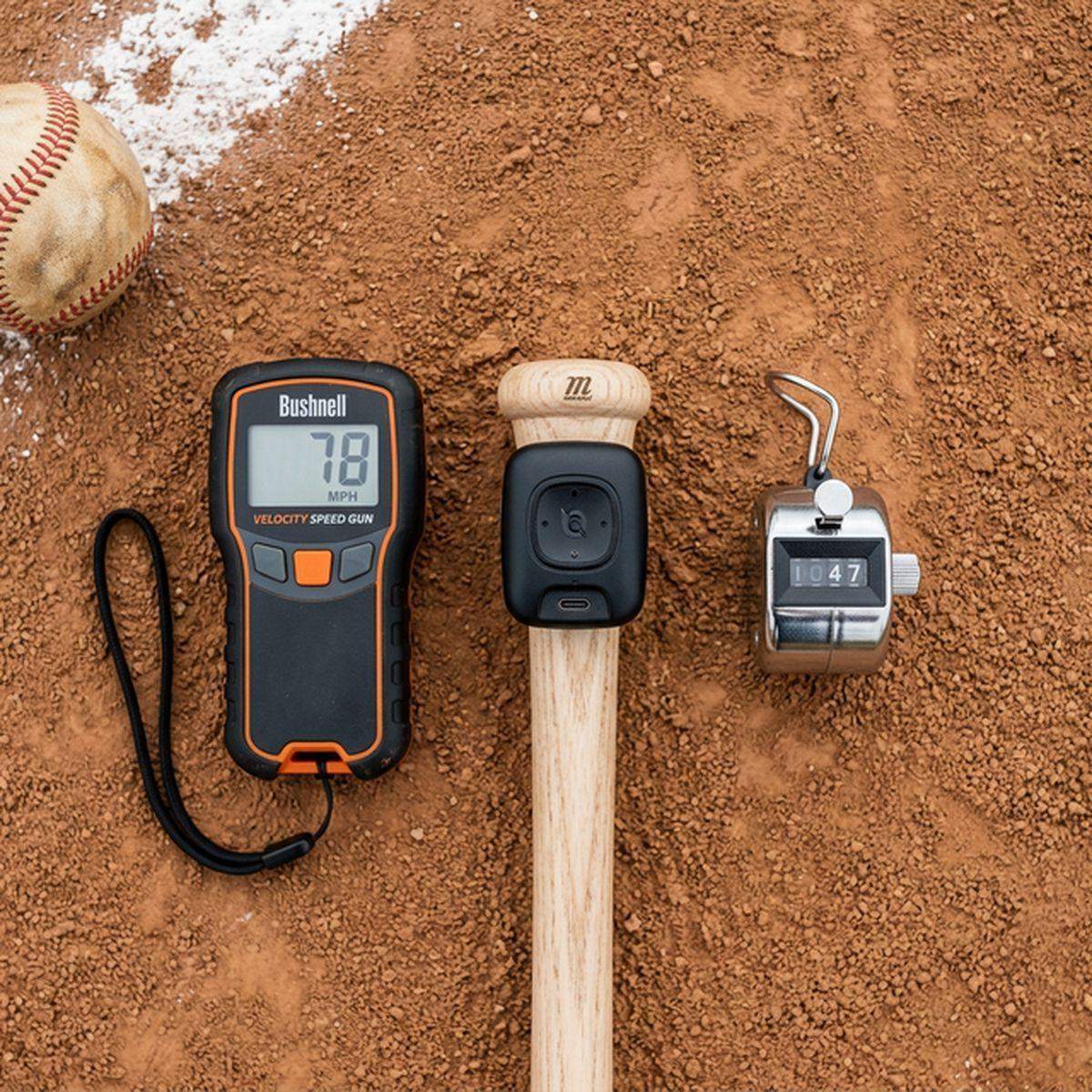
Youth baseball has more training tech available today than ever before. Radar guns that fit in your pocket, sensors that attach to bat knobs, and apps that track every pitch in a game. The challenge for parents is knowing which tools actually help development and which are expensive distractions.
This guide is the baseball tech filter: radar guns for velocity, bat sensors for hitting feedback, and pitch counters for arm-care discipline. For a deeper bat-sensor comparison, use our dedicated baseball swing analyzer guide.
Best Radar Guns for Youth Baseball
A radar gun measures pitch speed and, for hitting, exit velocity off the bat. For young pitchers, tracking velocity over a season provides objective progress data. For scouts and coaches, it’s a standard evaluation tool.
Pocket Radar Ball Coach
The Pocket Radar Ball Coach is the gold standard for youth baseball radar guns. It’s about the size of a cell phone, weighs 4.5 ounces, and reads speeds from 25-130 MPH with accuracy within 1 MPH. One-button operation means a parent standing behind the backstop can track every pitch without any setup.
Battery life is about 10,000 readings on two AAA batteries, which covers an entire season of practices and games. The device stores readings internally if you don’t want to track on paper.
It is expensive for casual use. But for families in competitive travel ball where velocity development matters, it is the radar category to consider first.

Pocket Radar
Pocket Radar Ball Coach
Cell phone sized, 1 MPH accuracy, 10K reading battery life
Pocket Radar Smart Coach
The Smart Coach adds Bluetooth connectivity to send readings directly to a phone app. The app logs velocities, charts trends over time, and exports data for sharing with coaches or scouts.
For most youth families, Bluetooth logging is useful but not mandatory. A notebook tracking session averages can provide enough long-term trend data.
Bushnell Velocity Speed Gun
The Bushnell is a traditional handheld radar gun at a fraction of the Pocket Radar’s price. It works, but it’s bulkier (requires two hands), noisier (loud click per reading), and less accurate at distance. Fine for backyard use, but awkward at games.
When to Start Tracking Velocity
Most coaches recommend waiting until age 12-13 for regular velocity tracking. Before that, pitching development should focus on mechanics and command, not speed. A 10-year-old obsessing over velocity will sacrifice arm health for extra MPH.
Best Bat Sensors
Bat sensors attach to the knob of a bat and measure swing speed, attack angle, time to contact, and barrel path. The data helps identify mechanical issues that are invisible to the naked eye.
Blast Baseball Swing Analyzer
Blast Baseball attaches to a bat and tracks swing metrics through a companion app. Blast’s current product materials emphasize swing path, bat speed, time to contact, attack angle, and auto-clipped swing video with metric overlays.
For hitters, the value is feedback loop speed. Instead of guessing whether a cue changed the swing, the player can compare a small block of swings and pair the numbers with video.
For the full comparison against Diamond Kinetics, read our best baseball swing analyzers guide.

Blast Motion
Blast Motion Baseball Swing Analyzer
Pro-grade swing metrics with video sync
Diamond Kinetics DK Bat Sensor
Diamond Kinetics says the DK Bat Sensor attaches to any bat, uses Bluetooth to send data to its mobile app, and supports swing metrics, lessons, games, and challenges.
That makes it a better fit for players who stay engaged by app-based goals and structured practice. Keep the session focused on one metric or challenge so the app does not become a distraction.
Are Bat Sensors Worth It?
For players in travel ball or high school who take hitting seriously, yes. The data can accelerate feedback loops between lessons and practices. Recreational players who only play one short season usually get more value from a tee, net, and regular reps.
For recreational leaguers playing one season per year, no. Focus on reps and fundamentals instead.
Best Pitch Counters
Pitch counts protect young arms. Every major youth baseball organization recommends pitch count limits, but keeping accurate counts during a game is surprisingly difficult.
GameChanger App (Free)
GameChanger is a free scorekeeping app that automatically tracks pitch counts by pitcher. If someone on your team already scores games in GameChanger (many travel teams do), pitch counts come built in. No additional purchase needed.
Manual Pitch Counters
A thumb-click mechanical counter clipped to a coach’s belt or lanyard is dead simple. Click once per pitch. No batteries, no app, no connectivity issues.
Pitch Count Apps
Dedicated apps like PitchCounter Pro and Pitch Count Baseball track counts, display recommended rest days based on USA Baseball guidelines, and log history across a season. Free or low-cost apps are the best solution for most parents.
Why Pitch Counts Matter
USA Baseball pitch count guidelines exist because young arms are physically vulnerable to overuse injuries. Tommy John surgery rates in youth players have increased significantly over the past decade. No radar gun number is worth a torn elbow ligament.
| Age | Max Pitches per Game | Required Rest (66+ pitches) |
|---|---|---|
| 9-10 | 75 | 3 calendar days |
| 11-12 | 85 | 3 calendar days |
| 13-14 | 95 | 3 calendar days |
| 15-16 | 95 | 3 calendar days |
| 17-18 | 105 | 3 calendar days |
Source: USA Baseball Pitch Smart Guidelines
Complete Baseball Tech Kit
Here’s what we’d recommend at each level:
| Level | Equipment |
|---|---|
| Rec League | Pitch counter app or manual counter |
| Travel Ball | Pitch counter plus swing analyzer if the hitter practices regularly |
| High School | Above plus radar gun if velocity tracking changes training decisions |
| Showcase Level | Above plus app-connected radar if coaches need shareable logs |
Our Recommendation
Start with a free pitch counter app. It protects your pitcher’s arm and costs nothing.
When your player shows commitment to development, usually around travel ball age 11-13, add a Blast or Diamond Kinetics bat sensor if the hitter will review the feedback with a parent or coach.
A radar gun is the last addition. Wait until your pitcher is old enough and actively developing velocity with an arm-care plan.
For more baseball content, see our baseball training aids guide, baseball swing analyzer guide, scorekeeping apps review, and video analysis apps.
Amazon prices and availability change often, so use product links for current pricing rather than treating any number in this guide as fixed.
FAQ
Should youth baseball players buy a radar gun or bat sensor first?
Most families should buy neither first. Start with a tee, net, and pitch-count discipline. Add a bat sensor when a hitter practices regularly, and add a radar gun only when velocity tracking will change a pitcher's training plan.
Are bat sensors useful for youth hitters?
Bat sensors are useful for motivated hitters who can review one or two metrics with a parent or coach. They are less useful for beginners who still need basic contact reps and simple swing cues.
When should a youth pitcher use a radar gun?
Regular velocity tracking is usually better for older youth pitchers who already have sound mechanics and an arm-care plan. Younger pitchers should prioritize command, mechanics, pitch counts, and rest.
Sources
- Blast Baseball swing analyzer product page
- Diamond Kinetics DK Bat Sensor
- Pocket Radar Ball Coach Radar
- MLB Pitch Smart pitching guidelines
Related Gear
How we evaluate: We combine manufacturer documentation, independent user feedback, and parent-focused criteria like safety, durability, ease of use, and long-term value.
Accuracy note: Pricing and product availability can change. Verify details on the retailer site before purchase.
Affiliate Disclosure: Sports Gadget Review is a participant in the Amazon Services LLC Associates Program. When you purchase through links on this page, we may earn a commission at no extra cost to you. Editorial recommendations are made independently.