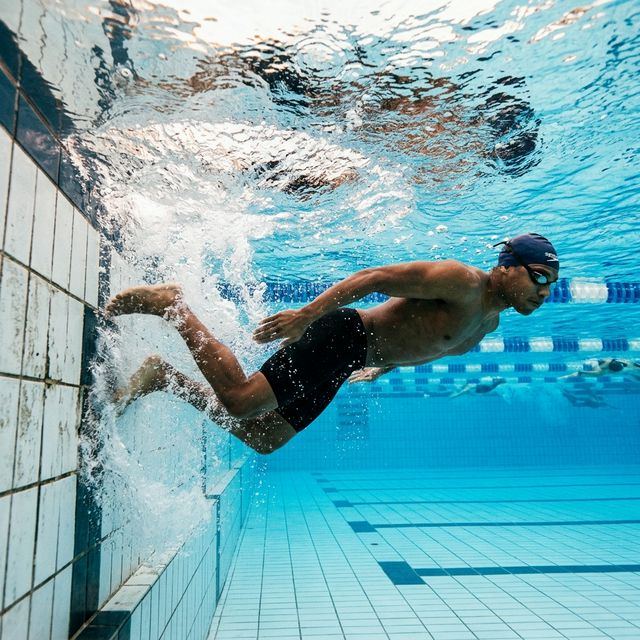
Swimming is one of the few sports where small technique improvements translate immediately to faster times. These tools help youth swimmers identify and fix inefficiencies before they become habits.
Top Picks at a Glance
| Tool | Function | Price |
|---|---|---|
| FORM Smart Swim Goggles | AR lap/pace display | $$$ |
| Finis Tempo Trainer Pro | Stroke rate metronome | $ |
| Garmin Swim 2 | Stroke analytics watch | $$ |
| Finis Neptune | Bone conduction underwater audio | $$ |
1. FORM Smart Swim Goggles, Best AR Display
Real-time stats projected inside the goggle lens while you swim: pace per 100m, lap count, stroke rate, split times. Syncs to the FORM app for post-swim analysis. Used by collegiate and Olympic-level swimmers.
Best for: Committed swimmers 12+ who want coach-level feedback every lap
2. Finis Tempo Trainer Pro, Stroke Rate Metronome
A small device that clips to your goggle strap and beeps at a set interval, teaching your swimmer to maintain a target stroke rate. One of the most cost-effective training tools available.
3. Garmin Swim 2, Best GPS Swim Watch
Tracks distance, pace, stroke count, stroke rate, and SWOLF score. Waterproof to 50m. Works in open water too.
4. Finis Neptune, Underwater Music Player
Bone conduction audio that works underwater, no earbuds needed. Helps younger swimmers stay engaged during monotonous yardage sets.
FAQs
At what age should swim tech start? Basic tools like tempo trainers are useful from age 8+. Smart goggles are better suited 11+ for reading while swimming.
Do these tools replace coaching? No, they complement coaching by giving objective data between coached sessions.
What’s the most important metric for youth swimmers? SWOLF (strokes + time per length), measures efficiency and is a great improvement proxy.
How to Use Swim Training Technology Effectively
Swimming is a data-dense sport, every lap is measurable, and small technique changes produce measurable speed changes. Here’s how to use technology to accelerate development:
At practice: Use a waterproof Garmin or Apple Watch to track lap count, pace/100m, and stroke rate automatically. Review after practice, not during, split checking mid-practice interrupts rhythm.
For technique work: An underwater camera (GoPro or similar in an underwater housing) at the end of the lane reveals the technique issues that even experienced coaches miss. Most stroke errors happen underwater where coach visibility is limited.
For goal-setting: Track pace/100m weekly. A 1-second improvement per 100m is significant. Over a 12-week training block, a 2–3 second improvement per 100m is realistic with consistent training.
Essential Swim Training Gear Beyond Electronics
Fins: Build ankle flexibility and reinforce proper kick mechanics. Short training fins are better than full scuba-length fins for technique development.
Pull Buoy: Removes the kick and forces upper body power work. Isolates stroke mechanics and builds pull strength.
Paddles: Oversize hand paddles build pull strength and amplify technique errors (if your hand entry is wrong, paddles make it feel worse, useful feedback).
Resistance Belt: Attach to the pool wall via cord for stationary sprint training, builds explosive power in the water.
Swimming Data: What the Numbers Mean
| Metric | What it tells you | How to improve |
|---|---|---|
| Pace/100m | Base speed | Interval training + technique |
| Stroke rate (strokes/min) | Turnover efficiency | Tempo training with a beeper |
| Distance per stroke | Power and glide | Catch mechanics + DPS drills |
| Split times | Even vs. negative splitting | Even-pace training |
Open Water vs. Pool: Different Tech Needs
Competitive pool swimmers need precise pace measurement, the FORM goggles deliver this in real time. Open water swimmers (triathlon, open water racing) need GPS tracking, use a Garmin Forerunner 955 with Multi-Sport mode or a Garmin HRM-Swim sensor.
FAQs, Extended
What’s the best tech upgrade path for a competitive swimmer? Start with a basic GPS watch (Garmin Forerunner 45) → add a chest-band HRM for accurate training zone data → upgrade to FORM Smart Swim Goggles when the athlete is competitive enough to benefit from split-by-split feedback.
Are waterproof earbuds useful for swimming? Bone conduction headphones designed for swimming (Shokz OpenSwim) are popular for motivation during long aerobic sets. Not recommended for technique work sets where coaching cues matter.
How young is too young for swim tech? Basic lap tracking watches (Garmin Bounce or Fitbit Ace) are appropriate from age 8. Dedicated swim computers make sense from around age 11–12 when athletes are training structured sets.
Updated: March 2026, Marcus Webb
Bottom Line
Swimming is arguably the most data-rich youth sport, every lap is measurable and improvements can be tracked in tenths of a second. The best swim tech tools translate directly into faster times and more efficient training. A good watch is the foundation; smart goggles are the premium upgrade. Start with accurate lap tracking and add video analysis once the athlete is competing at a club or AAU level where technique refinement drives meaningful time drops.
Updated: March 2026, Marcus Webb
Related Articles
- Waterproof Fitness Trackers for Swimmers
- Best Youth Hockey Training Equipment & Safety Gear
- Best Tennis Training Gadgets for Youth Players
We evaluate sports gear and fitness products independently. To learn more about our editorial standards, read our Editorial Policy.
How we evaluate: We combine manufacturer documentation, independent user feedback, and parent-focused criteria like safety, durability, ease of use, and long-term value.
Accuracy note: Pricing and product availability can change. Verify details on the retailer site before purchase.
Affiliate Disclosure: Sports Gadget Review is a participant in the Amazon Services LLC Associates Program. When you purchase through links on this page, we may earn a commission at no extra cost to you. Editorial recommendations are made independently.