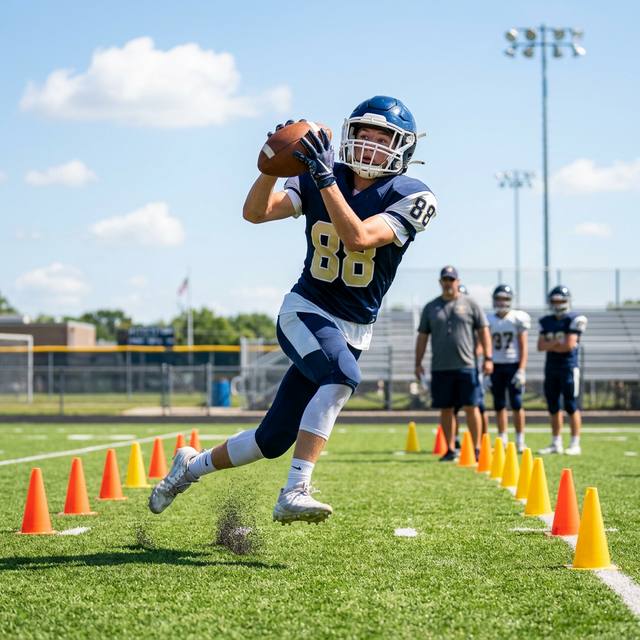
Being a wide receiver is one of the hardest skills in football to practice alone. Quarterbacks can throw to targets. Linemen can work on footwork alone. But receivers need someone to throw the ball to them to develop their real skills, route running, hand location, and concentration catching.
This 2026 youth guide covers the gear classes that actually help at home: catching trainers, target nets, hands-trainer gloves, and route cones. The right equipment makes solo receiver practice possible and partner sessions far more productive.
Listing check: “Receiver trainer” titles on Amazon swing between hands-trainer gloves, Jugs-style throwing machines, and backyard target nets. Confirm you are buying the glove or the net you meant, and that the Franklin net size matches your yard — not a soccer rebounder in a football photo.
The Core Receiver Skills to Train
Youth receivers (ages 9-15) should develop in this order:
- Hand catching, catching away from your body, not body catches
- Route running, precise cuts at exact depths
- Contested catches, catching with press coverage
- Concentration, catching while fatigued or distracted
Most training tools address one of these. The best home setups address at least two.
Catching Training Equipment
Jugs Machine ($1,500-3,000), The Gold Standard
A Jugs machine throws spiral passes at consistent speed and accuracy, allowing solo receiver practice without a QB. It’s what Division I programs and NFL teams use. At $1,500+, it’s priced for high school programs and serious private training facilities.
If your local high school, club, or YMCA has a Jugs machine available, this is the single best receiver training tool that exists. One hour with a Jugs machine per week is worth three hours of partner throwing sessions in terms of rep volume and consistency.
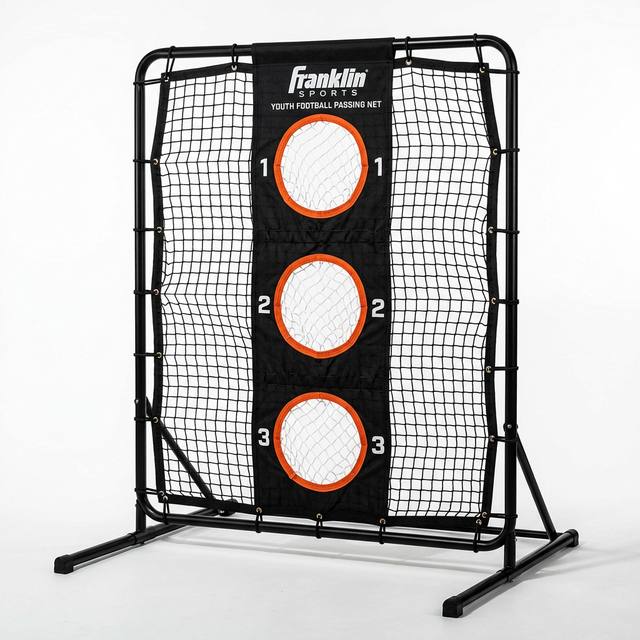
Franklin Sports Target Net ($35-50)
For QBs throwing to receivers, a target net provides zones for routes vs. contested catch work. Hung from a fence or tree, the net serves as a catching target for working on hand technique, receivers reach for the net, catch a ball thrown from behind, or use it as a concentration point.
 Best Value
 Franklin Sports
Franklin Sports Receiver Target Net
Mark exact landing spot for routes, works for solo hand drills too
Hands Trainer Catching Gloves ($30-60)
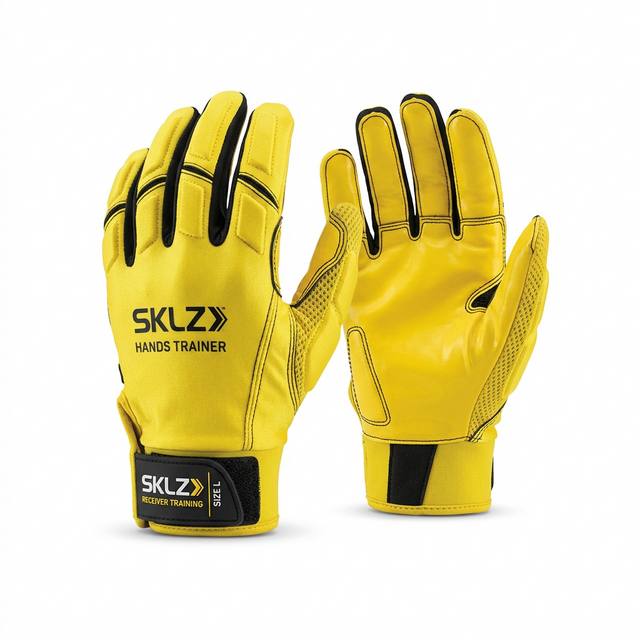
Standard football gloves are tacky and compensate for poor catching technique. Hands trainer gloves are slippery or have reduced tackiness to force proper hand positioning, thumbs together for low balls, pinkies together for high balls.
The SKLZ Hands Trainer Gloves ($45) are widely used by youth coaches. Receivers who train with slippery gloves find that when they switch back to standard grip gloves, everything becomes easier. This is the same principle as swinging a weighted bat in baseball.
 Best Technique
 SKLZ
SKLZ Hands Trainer Gloves
Slippery surface forces proper hand technique, real gloves feel easy afterward
Route Running Equipment
Agility Cones and Bags ($15-30)
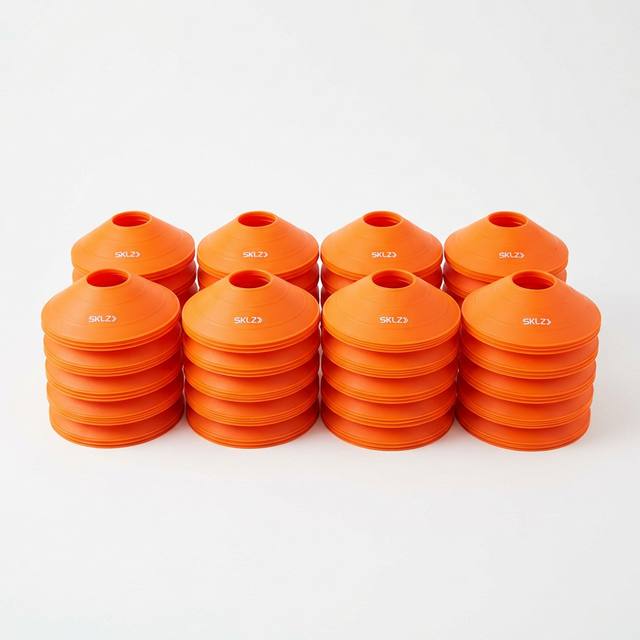
The most underrated receiver training tool. Setting cones at precise depths (5 yards for slants, 12 yards for curls, 15 for corners) teaches receivers to run measured routes rather than approximate ones. A 5-yard slant that turns at 4 yards or 6 yards runs wrong routes in games.
Disc cones don’t move when stepped on, safer for solo work. Diamond cones mark route points precisely. A 20-cone set and a measuring tape covers every route in the tree.
 Essential
 SKLZ
SKLZ Agility Cone Set (20 Pack)
Set exact route depths, runs precise 5-yard slants instead of guessing
Speed Ladder ($20-40)
Footwork separates average receivers from good ones at the high school level. A 10-yard speed ladder develops the precise, quick footwork needed for sudden cuts and stem moves at the top of routes.
10 minutes of ladder work daily produces visible improvement in 3-4 weeks. Focus on high knees, staying on the balls of your feet, and maintaining forward lean rather than going fast.
Ball Grip and Handling
Football Toss-Back Machine ($100-200)
A spring-loaded machine that catches your throw and fires the ball back at adjustable speed and angle. It’s the closest solo option to having a consistent QB partner. Not as good as a real Jugs machine, but functional for basic receive-and-repeat drill work.
Look for machines that return the ball on a fixed axis, random return angles create bad habits. You want to practice catching at a single, consistent catch point before adding randomness.
Reaction Ball ($12)
Throw a reaction ball into a hard surface and catch the erratic bounce. This drill develops the hand quickness and tracking skills needed for contested catches when defenders jostle the ball. Best used after standard catching form is solid.
 Quick Hands
 SKLZ
SKLZ Reaction Ball
Builds catch concentration and quick hands for contested balls
A Complete Home Receiver Workout
Solo (30 min):
- Ladder footwork (5 min), focus on clean steps, not speed
- Cone routes (10 min), ghost routes without the ball, precise cuts at measured depths
- Wall/net hand work (10 min), reach for target, concentrate on thumbs/pinkies together
- Reaction ball (5 min), alternate hands, don’t use gloves for this
With Partner (30 min):
- Short routes (10 min), slants, outs, comebacks at 5-8 yards
- Deep routes (10 min), posts and corners, track ball over shoulder
- Contested catches (10 min), partner holds arm across from behind as ball arrives
Ages and Development Notes
Players under 10 benefit most from any catching work that builds hand-eye coordination. Don’t worry about route precision yet, make the ball a friend first.
Ages 10-13 should focus on route precision (use the cones) and hand technique (gloves help here). The footwork habits formed at this age stick.
Ages 14+ should incorporate contested catch work and film study. If your player runs a bad stem or false step, they need to see it on video to understand the correction.
Our Recommendation
Start with a set of cones ($20) to run precise routes and the SKLZ Hands Trainer Gloves ($45). Together for $65, these two items address route running precision and hand technique, the two highest-value receiver skills to develop between the ages of 10-14.
For more youth football content, see our football training gear guide, concussion sensors for parents, and kids’ sports safety gear.
How we evaluate: We combine manufacturer documentation, independent user feedback, and parent-focused criteria like safety, durability, ease of use, and long-term value.
Accuracy note: Pricing and product availability can change. Verify details on the retailer site before purchase.
Affiliate Disclosure: Sports Gadget Review is a participant in the Amazon Services LLC Associates Program. When you purchase through links on this page, we may earn a commission at no extra cost to you. Editorial recommendations are made independently.