Smart sports balls promise to turn every practice session into a data-driven coaching opportunity. Some use internal sensors. Others, including the main current soccer option, use a phone or tablet camera to track drills. The question parents keep asking is practical: are they worth several times the price of a regular ball?
Listing check: Amazon search results mix SIQ basketball with Wilson X football and DribbleUp soccer under the same “smart ball” title. Confirm the sport, the ball size, and whether the listing is the current app-supported model — not a leftover miCoach or an unbranded sensor ball. Shot trackers and smart hoops beyond the ball itself live on smart basketball training aids. Street prices move; treat any dollar figure here as a listing check, not a lock.
Who should buy this — and who should skip
Buy SIQ-class basketball when a motivated middle-school or high-school shooter will run app sessions most weeks and someone will talk about the next rep. Browse the basketball hub if the hoop or a return chute is still the gap.
Buy DribbleUp soccer when a self-starting player will set up a phone tripod and pay the app subscription. If they just need touches, a regular ball plus a soccer rebounder on the soccer hub is the better first spend.
Skip first when:
- The athlete is under 12 and still learning a regular ball. App numbers do not teach form.
- Nobody will charge the ball or open the app after the first weekend.
- The listing is Wilson X basketball, Wilson X football, or Adidas miCoach without proof the app still pairs.
- You wanted football throwing volume. A regular ball and the QB training equipment / football hub beat a connected football that pauses for Bluetooth.
This desk compared current brand pages and the owner complaints that repeat (dead apps, subscription walls, balls that feel unlike game balls). It is not a claim that we shot a lab sample of every SKU.
The short answer is sport-specific. If you searched for the best smart basketball, SIQ is the current option we would compare first in 2026 because it is built around shot tracking and app analytics rather than a discontinued novelty app. Soccer still has a live digital-ball option in DribbleUp. Football smart balls remain the weakest category.
This is a multi-sport smart-ball comparison, not a basketball-only lab test. For shot trackers, dribble sensors, and smart hoops beyond the ball itself, use our smart basketball training aids guide.
TL;DR: Start with SIQ if you want a current smart basketball, and skip Wilson X as a first buy. DribbleUp is the best digital soccer ball for a self-motivated player who will use the app weekly. Skip discontinued smart balls unless you can verify app support before buying.
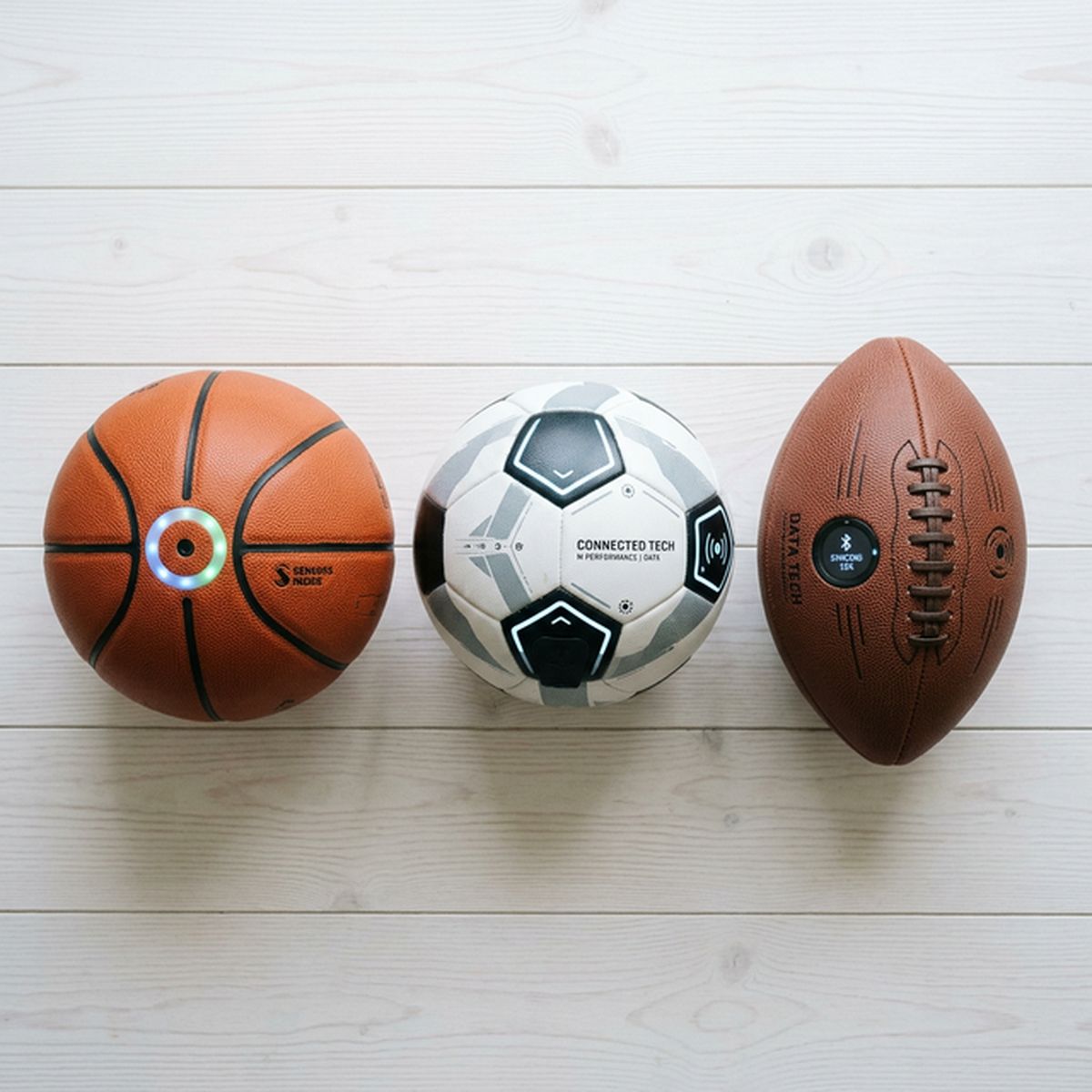
A smart basketball is a connected ball (or ball-plus-app system) that logs shots, arc, or reps. A digital soccer ball pairs with an app or camera-based system to guide drills, track touches, or show feedback. Both should supplement normal practice, not replace a regulation ball, cones, and coaching.
Quick Picks
| Need | Best pick | Why |
|---|---|---|
| Best current smart basketball | SIQ Smart Basketball | Better current app ecosystem than discontinued smart balls |
| Legacy smart basketball to skip first | Wilson X Connected Basketball | App risk; not the first buy in 2026 |
| Best digital soccer ball | DribbleUp Smart Soccer Ball | Guided drills, visual feedback, and the best data-to-improvement connection |
| Discontinued smart soccer ball to avoid | Adidas miCoach Smart Ball | Interesting strike tech, but app/platform support is the buying risk |
| Best value alternative | Regular match ball plus phone tripod | Better for most beginners and families who will not use the app weekly |
Best smart basketball overall: SIQ is the current option we would compare first because its official store describes real-time shot tracking, a 9D sensor, AI feedback, and app analytics. Wilson X can still show up used, but we would not make it a first purchase in 2026.
Best digital soccer ball overall: DribbleUp is the best choice for most youth players because it gives repeatable drills and feedback without requiring a coach to decode sensor numbers. Adidas miCoach is useful historical context for strike metrics, but the discontinued platform makes it hard to recommend as a purchase in 2026.
How We Compared
We evaluated smart sports balls as training tools, not novelty gadgets. We weighed each option on five things that decide real-world value: setup time before a drill, whether the app feedback is specific enough to change the next rep, how easily a parent can understand the app data, whether the ball feels close enough to a regular practice ball, and whether an athlete is likely to keep using it past the first week.
For the July 2026 update, we checked current manufacturer documentation and app requirements. DribbleUp’s setup guidance says the Smart Soccer Ball works through the DribbleUp app with a phone or tablet, requires iOS 13+ or Android 12+, and uses scanned ball tracking for real-time feedback and live or on-demand drills. Adidas miCoach remains useful context for kick-data technology, but the platform is discontinued, making used-condition and app-support checks essential before buying. SIQ is now the more relevant current smart-basketball comparison because its official store describes real-time shot tracking, a 9D sensor, AI feedback, and app analytics.
Practical filter: The biggest predictor of value is not sensor accuracy. It is whether the athlete repeats the drill without an adult restarting the session.
Quick Comparison
| Product | Sport | Price | Best For | Rating |
|---|---|---|---|---|
| SIQ Smart Basketball | Basketball | Check current price | Current smart shooting analytics | Active basketball option |
| Wilson X Connected Basketball | Basketball | Used/variable | Avoid as a first buy | Legacy/app risk |
| DribbleUp Smart Soccer Ball | Soccer | Check current price | Ball control drills and repeat home practice | Best active soccer option |
| Adidas miCoach Smart Ball | Soccer | Used/variable | Avoid unless app support is verified | Discontinued |
| Wilson X Connected Football | Football | Used/variable | Avoid as a first buy | Legacy/app risk |
How Smart Balls Work
Most older smart balls use accelerometers, gyroscopes, and Bluetooth connectivity. The sensors measure movement in three dimensions and transmit data to a companion app on your phone or tablet.
Newer app-first tools can work differently. DribbleUp does not rely on an internal ball sensor for soccer drills. It uses a phone or tablet camera to recognize the ball and guide the workout.
The question isn’t whether the sensors work. They do. The question is whether young athletes actually use the data to improve.
Smart Basketballs
SIQ Smart Basketball
SIQ is the current smart-basketball option we would compare first in 2026. Its official store describes a connected basketball with a 9D sensor, app feedback, shot tracking, AI analysis, and real-time stat feedback. That is more useful for a serious shooter than the older game-style smart balls because the product is built around repeatable shooting analytics rather than a short-lived novelty app.
The same caveat still applies: the data only matters if someone uses it to change the next rep. For youth players, we would treat SIQ as a shooting-workout tool for motivated middle-school and high-school players, not as a replacement for form coaching or regular team practice.
Shop smart basketball trackers on Amazon
Wilson X Connected Basketball (legacy/used)
The Wilson X connects via Bluetooth and tracks shot attempts, makes, and arc. The companion app gamifies practice with shooting challenges and leaderboards.
The Wilson X could motivate younger players who responded to game-like challenges. The actual shot tracking data was less useful because kids at that age need form correction, not arc analysis.
For older players, the novelty can wear off quickly. Serious players may notice the different weight distribution during game play, and app support is inconsistent. We would not make Wilson X the first smart-basketball purchase in 2026.
Spalding Shot Tracker / Shot-tracking alternatives
A wristband-and-net sensor combo rather than a smart ball. It tracks makes and misses using sensors on the net and the shooter’s wrist. Less accurate than the Wilson X but works with any regular basketball, which is a significant advantage.
Our Take on Smart Basketballs
For casual family practice and younger kids, game-style smart balls can be fun motivational tools. For serious competitive players, either use a current shot-tracking system like SIQ or stick with a regular game ball and a structured shooting chart. The muscle memory needs to match what they will use in games.
If you need more than the ball itself — wrist sensors, smart hoops, or return systems — go to our smart basketball training aids guide. This page stays focused on connected balls and how they compare to soccer and football options.
Smart Soccer Balls
Adidas miCoach Smart Ball (used/variable)
This was the original smart soccer ball, tracking strike speed, spin, and trajectory through the miCoach Smart Ball app. When struck, it sends feedback to your phone showing where and how you hit the ball. This data is genuinely useful for teaching proper striking technique because young players can see the connection between foot placement and ball behavior.
The buying problem is support and condition. The miCoach platform is discontinued, and the official manual shows the ball depends on app pairing and compatible Bluetooth Smart devices. In 2026, avoid buying a used miCoach ball unless the seller proves the exact app/device setup works before purchase.
DribbleUp Smart Soccer Ball
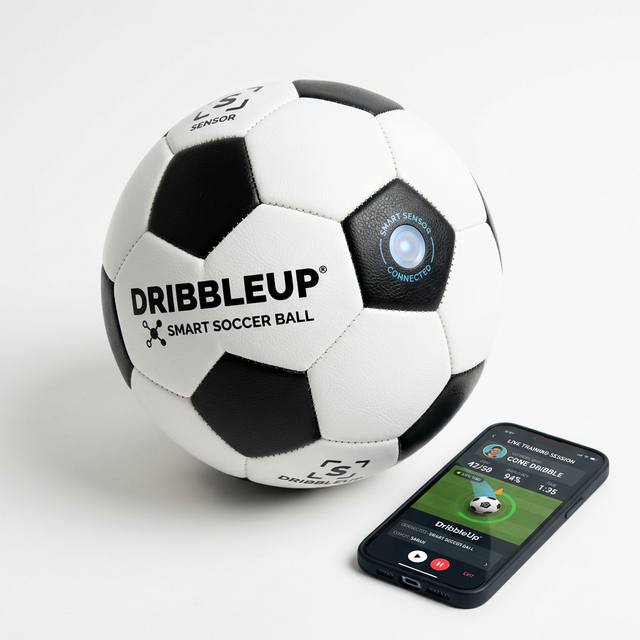
The DribbleUp uses your phone camera rather than internal sensors. You set your phone on a tripod, and the app’s scanned ball tracking follows the ball during dribbling drills. DribbleUp’s official setup guidance describes using the DribbleUp app with a phone or tablet, and the product page positions the ball around interactive drills and real-time feedback rather than raw sensor metrics.
DribbleUp’s current setup guidance lists iOS 13+ or Android 12+ as requirements. The upside is guided training. The downside is setup friction: players have to position a phone or tablet, open the app, scan the ball, and make sure lighting is good before every session. That makes it better for planned home practice than spontaneous backyard play.
When searching for the best digital soccer ball, it’s important to understand the ongoing costs. While the ball itself is a one-time purchase, the DribbleUp app requires a monthly subscription for full access to its live and on-demand interactive classes. Without the subscription, training modes are heavily limited, so factor this recurring fee into your budget.
 Best for Soccer
 DribbleUp
DribbleUp Smart Soccer Ball
Guided soccer drills through app-based scanned ball tracking
Smart Soccer Ball Alternatives: Wearable Boot Trackers
If you find phone-camera tracking or sensor-loaded balls too limiting, wearable boot sensors are the leading alternative.
The PlayerMaker Uno/City attaches directly to your cleats. Instead of using a camera or internal ball sensors, it measures foot-to-ball interactions, contact time, kick velocity, and physical metrics like speed and distance.
- Pros: Works with any soccer ball, can be used outdoors in any lighting, and gives professional-grade team analytics.
- Cons: Requires a subscription for full app features, and does not provide the gamified, follow-along drill screen that DribbleUp does.
For players who want to track their performance during real team scrimmages rather than solo backyard drills, a wearable tracker is often a better investment than a dedicated digital soccer ball. See our full kids and youth wearables hub for GPS watches and activity trackers alongside boot sensors.
Our Take on Smart Soccer Balls
Smart soccer balls can be more useful than smart footballs for youth development because the feedback connects to repeatable ball-control drills. However, app feedback is still not a replacement for a coach watching body position, first touch, and decision-making.
For most families searching for the best digital soccer ball, the decision is simpler: buy DribbleUp if your player will actually follow app drills two or three times per week. Buy a regular best youth soccer ball, soccer rebounder, and home soccer training setup if they are still building basic touch, passing, and shooting habits.
Smart Footballs
Wilson X Connected Football ($80-100)
The Wilson X football tracks spiral rate, velocity, and distance. The data shows clear differences between a tight spiral and a wobbly throw, which gives quarterbacks objective feedback on their mechanics.
Limitations
Smart footballs have the narrowest useful audience of any smart ball category. Only quarterbacks and receivers benefit from the data, and the ball needs to be re-synced via Bluetooth after every few throws. In a typical backyard throwing session, the constant pausing to check data disrupts rhythm.
Also, the ball’s weight distribution differs slightly from a standard football. Competitive QBs noticed the difference and didn’t want to develop mechanics on a ball that felt different from game balls.
Our Take on Smart Footballs
Skip them for youth players. A quarterback who throws 100 spirals per day with a regular ball will develop better mechanics than one who throws 30 with a smart ball and pauses to check their phone between each rep.
The Data Problem
Here’s the fundamental issue with smart sports balls for youth athletes: the data is useful primarily to coaches and experienced players who already understand what the numbers mean. A 9-year-old who sees “42 RPM backspin” on their shot doesn’t know whether that’s good, bad, or irrelevant.
For the data to drive improvement, someone needs to interpret it and translate it into actionable coaching cues. If your family has a parent or coach who can say “your backspin is low because your release point is too flat, try flicking your wrist more,” then the smart ball adds value. Without that interpretation layer, the data is just numbers on a screen.
When Smart Balls Make Sense
They work best when:
- Your athlete is already competitive and motivated to improve specific skills
- A parent or coach actively reviews the data with the player
- The smart ball is a supplement to, not replacement for, regular practice
- Your budget allows for the premium without sacrificing other training needs
They don’t make sense when:
- Your athlete is a beginner still learning fundamentals
- No one will review the data consistently
- The novelty factor is the primary draw
- Your athlete plays position(s) where ball data isn’t relevant
Cost Comparison
| Product | Smart Price | Regular Price | Premium |
|---|---|---|---|
| SIQ Smart Basketball | Check current price | $30 | Usually several times more |
| Used Wilson X Basketball | Variable | $30 | Depends on condition/app support |
| DribbleUp Soccer | Check current price | $25 | Usually several times more |
| Wilson X Football | Variable | $30 | Depends on condition/app support |
You are usually paying several times more for the smart version. That premium only makes sense if the app creates repeat weekly practice.
Our Recommendation
For most youth athletes under 12, buy a regular quality ball and spend time practicing with them. The human coaching element (even from a parent who played casually) provides more useful feedback than app-generated numbers.
If you want the best smart basketball in 2026, SIQ is the current option we would compare first. Skip Wilson X as a first purchase. For shot trackers, dribble sensors, and smart hoops beyond the ball, see our smart basketball training aids guide.
For soccer, the DribbleUp Smart Soccer Ball is still the best digital soccer ball we can recommend if a competitive athlete 13+ will actually use the app two or three times a week.
Skip smart footballs entirely. Skip legacy smart basketballs unless your family treats practice as a casual game.
See also our smart basketball training aids, basketball training equipment guide, smart soccer training tech, smart shin guards for youth soccer, smart insoles for youth soccer, youth soccer home training setup, and best gear under $100.
Related Articles
- Smart Basketball Training Aids
- Best Basketball Training Equipment
- Best Smart Soccer Training Tech
- Youth Soccer Home Training Program Equipment
- Youth Sports Tech Holiday Gift Guide
- Basketball hub
- Soccer hub
- Football hub
Sources
- DribbleUp Smart Soccer Ball setup and use
- DribbleUp Smart Soccer Ball official product page
- Adidas miCoach Smart Ball user manual
- SIQ Smart Basketball official store
Frequently Asked Questions
What is the best smart basketball in 2026?
SIQ is the current smart-basketball option we would compare first in 2026. Its official store describes a connected basketball with a 9D sensor, shot tracking, AI analysis, and app analytics. We would not make the older Wilson X the first purchase because app support is inconsistent. For shot trackers and smart hoops beyond the ball itself, see our smart basketball training aids guide.
What is the best digital soccer ball for youth players?
The DribbleUp Smart Soccer Ball is the best digital soccer ball currently worth considering for most youth players. It uses the DribbleUp app with a phone or tablet camera to turn solo dribbling practice into guided drills. Legacy options like Adidas miCoach are discontinued and should generally be avoided.
Are smart sports balls worth it for youth athletes?
They can be worth it for motivated athletes who will use the companion app consistently. For most kids under 12, a regular quality ball plus consistent practice is usually a better value.
Which smart sports ball has the best data?
The SIQ Smart Basketball provides the deepest raw shot analytics because it uses an internal 9D sensor and app-based feedback. For soccer, DribbleUp gives more practical home-training feedback through camera-based drill tracking.
Do smart balls affect muscle memory?
Some smart balls can feel different from a standard regulation ball, especially models with internal sensors. Use them as targeted practice tools, not full replacements for game balls.
How we evaluate: We combine manufacturer documentation, independent user feedback, and parent-focused criteria like safety, durability, ease of use, and long-term value.
Accuracy note: Pricing and product availability can change. Verify details on the retailer site before purchase.
Affiliate Disclosure: Sports Gadget Review is a participant in the Amazon Services LLC Associates Program. When you purchase through links on this page, we may earn a commission at no extra cost to you. Editorial recommendations are made independently.