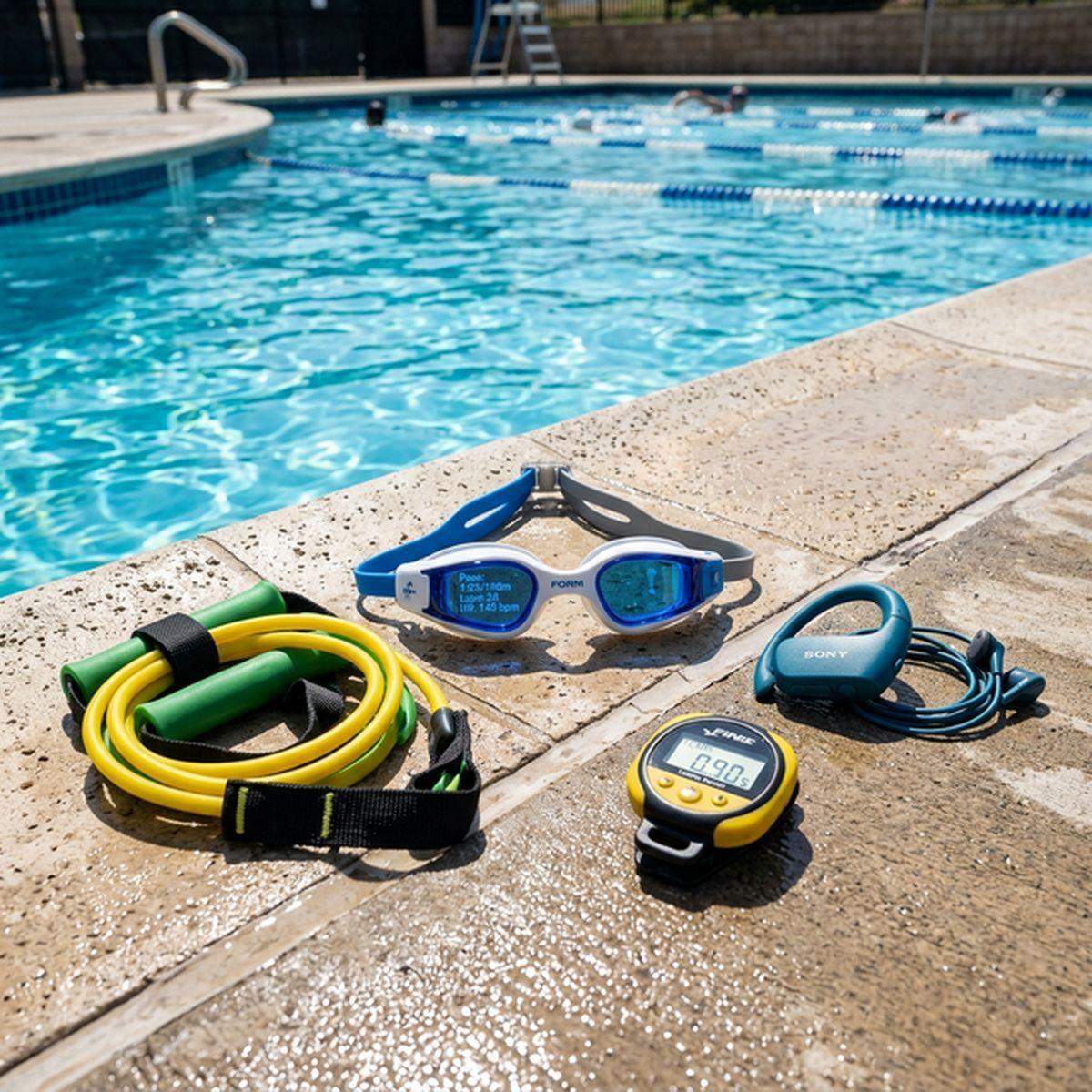
Most “waterproof” fitness trackers survive a splash. Far fewer log a pool practice the way a club coach cares about: lengths, stroke type, rest intervals, and a heart-rate curve that is at least directionally useful after the last 25.
This page stays the youth pool-practice angle (lap / stroke / underwater HR for club kids). The broader waterproof fitness trackers for swimming compare is the multi-sport / open-water shortlist. Both URLs stay live.
Desk research: manufacturer water-rating pages and swim-mode manuals (Garmin vívoactive 5, Apple Watch SE, Fitbit Ace 3), Fitbit’s own “which devices track swims” table, and the Amazon title mix. Not a lab test this desk ran, not a month on deck with a stopwatch, and not a star rating.
Listing check: Amazon “swim watch” and “kids waterproof tracker” results mix (1) 5 ATM / 50 m swim-rated watches with a real pool profile, (2) IP68-only lifestyle bands sold as “swimproof,” (3) a Fitbit Ace 3 that is water-resistant to 50 m but is not on Fitbit’s swim-length tracking table, (4) dedicated Garmin Swim 2 leftovers next to vívoactive / Forerunner photos, and (5) Apple Watch SE vs Series vs Ultra in the same tile. Confirm the water rating on the manufacturer sheet (5 ATM / 50 m minimum for pool work), that pool length is a setting you can set, and that a “kids swim” result is not just an adult watch with a colorful band. Street prices move; treat any dollar figure here as a listing check, not a lock.
Who should buy this — and who should skip
Club / practice-log families. The job is a 25-yard or 25-meter pool, five or six times a week. You want lengths, a rest timer, and a watch the kid will actually start before the first send-off.
Rec / learn-to-swim. You want the band to survive the deck and the water. You do not need stroke-type charts.
Skip first. Skip IP68-only bands with no pool profile — they survive a soak and log nothing useful. Skip a third-party “swim tracker” app on a watch that has no swim mode; Garmin, Apple, and Fitbit built-in pool modes beat aftermarket accelerometer guesses. Skip the Ace 3 if you wanted laps or stroke type. Skip Apple Watch Ultra if the only job is a 12-year-old’s pool log — that is a different watch and a different budget. Skip open-water GPS as the reason to buy if the athlete never leaves a pool.
Goggle-strap tempo tools and AR goggles live on swim training gadgets. This page is the wrist.
What “waterproof” actually means
Water-resistance copy is the first Amazon fail. Read the code, not the adjective.
- IP68 is a lab soak in still water. It is not a swim rating.
- 5 ATM / 50 m is the usual consumer floor for lap swimming. Garmin publishes Swim, 5 ATM on the vívoactive 5. Fitbit publishes water resistant up to 50 meters (and an IPX8 note) on the Ace 3. Apple publishes 50 m (swimproof) on Watch SE under ISO 22810:2010 — shallow pool or ocean, not scuba or high-velocity water sports.
- 10 ATM (and Apple Watch Ultra’s dive rating) is a different job than club practice.
ATM numbers are static-pressure equivalents, not a promise that flip turns and dive starts are “certified.” For this page, the buy filter is: published swim rating + a real pool activity, then rinse after chlorine.
Garmin’s own swim notes matter in the pool: the vívoactive 5 touchscreen is off during swim activities, you set pool size before you start, and Auto Rest can invent a rest interval if the kid keeps waving on the wall. Button presses underwater are a skip on any 5 ATM watch — a momentary seal break is how “waterproof” listings become a dead puck in March.
What actually matters in the pool
Three jobs separate a swim watch from a wet step counter.
Lap / length detection. Pool mode uses the accelerometer and the pool length you typed. Wrong length (25 yd vs 25 m vs a 20-yard teaching pool) makes every pace and distance wrong. Drill sets, kickboard lengths, and mid-lap stops are the usual miss — that is a motion-pattern limit, not a star we invented.
Stroke type. Garmin publishes pool stroke-type detection (freestyle, backstroke, breaststroke, butterfly) on the vívoactive 5. Apple publishes automatic stroke detection and kickboard detection on Watch SE. Backstroke is the weak pattern on wrist sensors across brands because the arm path is less distinct. Treat stroke charts as a practice log, not a stroke judge.
Heart rate in water. Optical wrist sensors fight refraction, a loose wet band, and no Bluetooth path through water. Garmin publishes underwater wrist-based heart rate on the vívoactive 5. That is a feature flag, not a clinic claim. A swim-capable chest strap that stores the session and syncs on deck (Garmin HRM-Pro / Polar H10 class) is the accuracy path if a coach is actually prescribing zones. Most 11-and-unders do not need that stack.
Battery. Pool-only tracking barely dents a Garmin. Open-water GPS plus wrist HR is the drain. Apple Watch SE is the daily-charge habit; Garmin is the “charge on Sunday” habit. Pick the one the kid will start, not the one with the longer spec-sheet week.
Pool picks (jobs, not trophies)
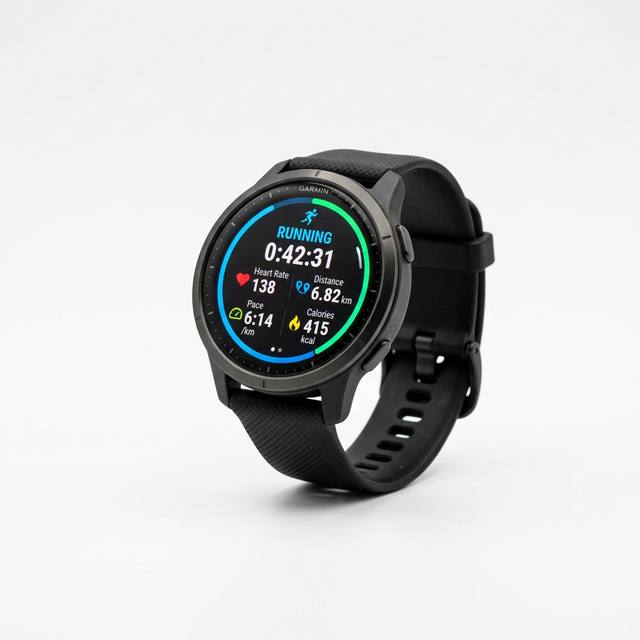
Club log: Garmin vívoactive 5
Garmin publishes pool swimming and open water swimming, lengths / distance / pace / stroke count / SWOLF, stroke-type detection (pool only), Auto Rest, and underwater wrist HR, on a 5 ATM watch. Manual: pick Pool Swim, set pool size, start. That is the club-practice job on this page.
Buy it when the athlete is in the water most weeknights and someone will look at lengths and rest.
Skip it when you wanted a dedicated Swim 2 / Forerunner swim watch (that comparison lives on the multi-sport swimming shortlist), or the kid is under 10 and will lose a $300 watch on the bleachers.
 Best Overall
 Garmin
Garmin Vivoactive 5 GPS Smartwatch
Published pool profile: lengths, stroke type, Auto Rest, 5 ATM
Survives the deck: Fitbit Ace 3
Fitbit publishes water resistant up to 50 meters and a Water Lock so buttons do not fire in the pool. Fitbit’s swim-tracking help table lists Charge / Inspire / Versa-class devices for pool lengths. Ace 3 is not on that table. Heart rate is not the Ace 3 job either.
Buy it when the swimmer is young, the risk is “left it on the deck,” and you only needed a band that survives practice.
Skip it when a coach asked for laps, SWOLF, or stroke counts. A colorful listing that says “kids swim tracker” next to Ace 3 photos is the listing-check fail.
 Best for Young Kids
 Fitbit
Fitbit Ace 3 Kids Activity Tracker
50 m water resistance for kids who will lose a real swim watch
Phone-ecosystem pool log: Apple Watch SE (2nd gen)
Apple publishes pool and open-water swim workouts, custom pool workouts, splits and auto sets, SWOLF, automatic stroke detection, kickboard detection, and 50 m ISO 22810 swimproof on SE. Pool length is a required start setting. Water Lock is automatic in a swim workout; you clear the speaker with the Digital Crown after.
Buy it when the family already lives on iPhone and will actually start Pool Swim every practice.
Skip it when battery anxiety will mean the watch is dead on the bench by Thursday, or you needed Garmin’s week-long habit. SE is not Ultra — do not pay Ultra money for a pool log.
 Best Swim Data
 Apple
Apple Watch SE (2nd Gen)
ISO 22810 50 m plus a real Pool Swim workout, not a splash rating
Open water vs pool tracking
Pool mode is an accelerometer + pool-length setting. Ask the coach if the home pool is 25 yards or 25 meters before you blame the watch.
Open-water mode turns on GPS. Useful for triathlon or lake work. The antenna needs surface time; a watch under a swim cap or a long underwater glide will gap. Youth club swimmers who only see a pool do not need this mode as the reason to buy.
Chest straps vs wrist sensors (only if zones are assigned)
If a coach is actually writing heart-rate sets, a swim-rated strap that records onboard (Bluetooth does not reliably cross water) and dumps to the watch on deck is the honest stack. Wrist PPG in water is a trend line.
Most families should skip the strap until someone is asking for zones, not vibes. The general chest-vs-wrist argument is on heart rate monitors: chest vs wrist — that page is not this pool-practice log.
Chlorine and long-term durability
Pool chemicals eat bands and gaskets whether the rating is 5 ATM or 10.
- Rinse fresh water after every session. Ten seconds.
- Plan on a cheap aftermarket silicone band if the kid swims daily. The watch is the sensor, not the strap color.
- Do not press buttons underwater.
- Dry the optical window. A winter of damp storage is how “random HR” starts in January.
Which tracker fits your swimmer?
| Swimmer profile | First watch | Why |
|---|---|---|
| Rec / learn-to-swim, under ~10 | Fitbit Ace 3 | Survives the deck; no fake lap analytics |
| Club, 5–6×/week, pool only | Garmin vívoactive 5 | Published pool metrics + week-class battery |
| iPhone household, wants Apple’s pool workout | Apple Watch SE | ISO 22810 50 m + Pool Swim / SWOLF / stroke type |
| Coach assigned HR zones | SE or vívoactive plus a swim strap that stores the set | Wrist HR in water is not a threshold tool |
Frequently asked questions
Can the kid shower with it?
A 50 m / 5 ATM rating is built for swimming, not for a hot shower as a lifestyle. Soap and heat are harder on gaskets than a 25-yard send-off. Rinse, dry, done.
Why does lap count drift on drill day?
Kick sets, one-arm drills, and mid-pool stops do not look like a race length. Use manual rest if Auto Rest keeps inventing intervals. This is expected accelerometer behavior, not a secret “accuracy %” from this desk.
Is IP68 enough for summer league?
No. IP68 is the listing-check fail for this page.
Related Articles
How we evaluate: We combine manufacturer documentation, independent user feedback, and parent-focused criteria like safety, durability, ease of use, and long-term value.
Accuracy note: Pricing and product availability can change. Verify details on the retailer site before purchase.
Affiliate Disclosure: Sports Gadget Review is a participant in the Amazon Services LLC Associates Program. When you purchase through links on this page, we may earn a commission at no extra cost to you. Editorial recommendations are made independently.