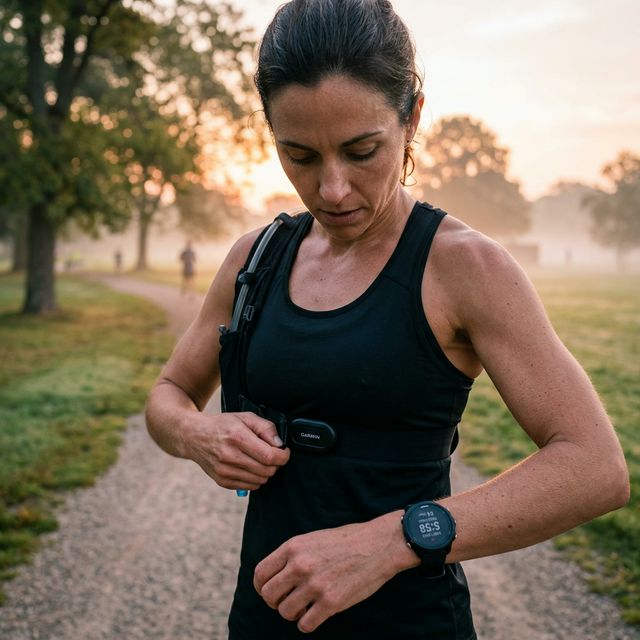
Answer first: most kids do not need a dedicated heart rate monitor for rec soccer or basketball. Buy one when a clinician set a hard ceiling, when a high-volume athlete is showing burnout signs, or when you want a simple “easy vs hard” cue. Skip it for curiosity, calorie screens, and teammate comparisons.
This page is the youth / parent use-case guide: rec skip, medical ceiling, burnout watch, strap itch on a smaller ribcage. It is not the adult chest vs wrist accuracy ranking — that stays on Best Heart Rate Monitors 2026: Chest & Wrist Picks. It is not the bike-computer pairing page (handlebar grip, ANT+, indoor-trainer sweat) — that stays on heart rate monitors for cycling. Easy aerobic work only is the narrower Zone 2 wrist vs chest strap guide. You can also drop an age into our free heart rate training zone calculator to turn those readings into target zones in beats per minute. If a GPS watch is already on the wrist and distance looks wrong, that is a different problem — use the GPS watch distance error calculator. Browse the wearables hub if you are still choosing the aisle.
This desk compared manufacturer specs, pediatric exercise-HR ranges published for healthy kids, and the complaints that repeat in owner notes (strap itch, optical bounce in basketball, “kids” listings that are adult watches). Desk research only — not a lab test, not a clinic consult, and not a claim that we instrumented a youth roster.
Listing check: Amazon chest-strap and watch listings reuse the same “heart rate monitor for kids” title. Confirm the strap size (youth vs adult), whether optical HR is wrist-only, and that a “kids” listing is not just an adult watch with a colorful band. Street prices move; treat any dollar figure here as a listing check, not a lock.
Who should buy this — and who should skip
Buy a chest strap when a doctor or athletic trainer asked for accurate session HR, or when a teen trains most days and a parent will actually look at recovery trends. Polar H10-class straps are the usual research-grade Bluetooth/ANT+ pick.
Buy a wrist watch when the kid will not wear a strap and you only need “was practice hard?” awareness. Optical sensors drift when the wrist is slapping a ball. That is a comfort buy, not a medical instrument.
Skip first when:
- There is no medical reason and the athlete plays 2–3 times a week.
- The goal is calories. Those estimates are worse for kids and are the wrong lesson.
- You wanted a GPS watch for cross-country. Shop youth XC and track GPS watches instead of a strap-only listing.
- Nobody will charge the watch or wet the strap electrodes.
- You are shopping an adult interval / HIIT accuracy cart. That is chest strap vs wrist, not this page.
- The kid does not ride with a bike computer. A cycling HRM strap is heart rate monitors for cycling.
A heart rate gadget is not concussion gear and not a diagnosis. Sensors do not clear an athlete. Impact questions belong on concussion sensors for youth sports.
Youth use cases this page covers (and the ones it does not)
| Parent question | This page | Sister page |
|---|---|---|
| Rec kid, 2–3 practices a week, curious about BPM | Skip the buy — easy-vs-hard talk is free | — |
| Clinician set a hard ceiling during exercise | Chest strap if they asked for accurate session HR | Not a substitute for the clinician |
| High-volume teen, burnout / resting-HR drift | Wrist watch they will actually wear, or a youth-length strap | Recovery tools, not more sensors |
| Adult intervals, lifting, or “which sensor is more accurate?” | Do not start here | Chest strap vs wrist |
| Bike computer, hoods, trainer sweat | Do not start here | Cycling HRMs |
| Easy aerobic Zone 2 only | Optional awareness | Zone 2 wrist vs chest |
The unique listing-check vs Amazon “heart rate monitor for kids” copy: the title often means an adult Polar or Garmin strap with a colorful band, or a GPS toy watch that only advertises BPM. Confirm youth strap length, chest vs wrist vs arm, and that you did not click a cycling puck.
Why Track a Young Athlete’s Heart Rate?
There are valid reasons to monitor - and some that aren’t worth the investment:
Good reasons:
- Medical conditions: Kids with known cardiac conditions who need heart rate boundaries during exercise
- Overtraining prevention: Competitive athletes training 5+ days per week who show signs of burnout
- Intensity guidance: Helping young athletes learn what “hard effort” versus “easy effort” actually feels like
- Recovery monitoring: Tracking resting heart rate trends to identify illness or fatigue before symptoms appear
Less valid reasons:
- General curiosity (probably not worth the cost)
- Comparing your kid’s numbers to other kids (unhealthy, normal ranges vary widely)
- Tracking calories burned (inaccurate for kids, and calorie counting is inappropriate for most youth athletes)
Understanding Heart Rate Zones for Kids
Kids’ heart rates are naturally higher than adults’. Here’s what to expect:
| Age | Resting HR | Max HR (estimated) | Moderate Zone | Vigorous Zone |
|---|---|---|---|---|
| 6-9 | 75-110 bpm | 210-215 bpm | 105-150 bpm | 150-195 bpm |
| 10-13 | 70-100 bpm | 207-210 bpm | 100-145 bpm | 145-190 bpm |
| 14-17 | 60-90 bpm | 203-207 bpm | 95-140 bpm | 140-185 bpm |
These are approximate ranges. Individual variation is normal. A resting heart rate of 95 in a healthy 10-year-old is not a concern - but a sudden sustained change from their baseline could indicate overtraining or illness.
Our Top Picks
Best Chest Strap: Polar H10
For accuracy, nothing beats a chest strap. The Polar H10 is the gold standard - it’s what research studies use when they need reliable heart rate data. The H10 connects to virtually every fitness app via Bluetooth and ANT+, and its internal memory can record a session without a phone nearby.
The downside is comfort. Owner notes on youth use cluster around the first-week itch and a strap that rides up on smaller ribs. Families who cannot get a clean, snug fit usually move to a wrist optical watch and accept the accuracy tradeoff.
 Most Accurate
 Polar
Polar H10 Heart Rate Monitor
Most accurate heart rate monitor available
Best Budget Chest Strap: Wahoo TICKR
The TICKR delivers similar accuracy to the Polar H10 at nearly half the price. It lacks internal memory (it needs a connected phone or watch to record), but for most families that’s fine - the phone stays in a parent’s pocket during practice anyway.
The strap runs slightly large on many listings, which is a problem for smaller kids. Do a listing check for youth length or a shorter spare strap before you assume an adult TICKR will cinch down. Do not cut and resew a heart-rate strap unless you are comfortable voiding the return.
 Best Value
 Wahoo
Wahoo TICKR Heart Rate Monitor
Accurate monitoring at half the price
Best Wrist-Based: Garmin Forerunner 55
For kids who won’t tolerate a chest strap (common under 10), a wrist-based optical sensor is the practical choice. Brand and independent optical-HR write-ups put steady-state error in a few-bpm range versus a chest strap; the gap widens in intervals and sports with a lot of wrist snap. Treat the Forerunner 55-class watch as “good enough for zones,” not as a medical reading.
Where wrist monitors struggle is during high-intensity intervals and sports with lots of wrist movement (basketball, volleyball). If pinpoint accuracy matters for medical reasons, the chest strap is still the better choice.
The Forerunner 55’s biggest advantage is that kids actually wear it willingly. It looks like a normal sports watch, tracks their activities, and doesn’t require a secondary device strapped to their chest.

Garmin
Garmin Forerunner 55
Kids actually want to wear it
Chest Strap vs. Wrist Monitor: Which Is Better for Kids?
Heart Rate Monitors - Compared
| Feature |
Editor's Choice
Polar Polar H10 | Wahoo Wahoo TICKR | Garmin Forerunner 55 |
|---|---|---|---|
| Best For | Maximum accuracy | Budget accuracy | Kids who dislike straps |
| Type | Chest strap | Chest strap | Wrist optical |
| Accuracy | ±1 bpm | ±1 bpm | ±3-5 bpm |
| Battery | 400 hours | 500 hours | 14 days |
| Comfort | Moderate | Moderate | High |
| Price | $89.00 | $49.99 | $199.99 |
| Check Price | Check Price | Check Price |
When to Actually Worry
Most heart rate data from youth sports is interesting but not actionable. Here are the specific situations where the data matters:
See a doctor if:
- Resting heart rate suddenly increases by 15+ bpm and stays improved for several days
- Your child reports heart racing, skipping beats, or chest pain during exercise
- Heart rate doesn’t return to near-resting within 10 minutes of stopping exercise
- Your child faints or feels dizzy during physical activity
Talk to their coach if:
- Average practice heart rate consistently exceeds 85% of max (potential overtraining)
- Recovery between drills takes longer than peers despite similar fitness levels
- Your child’s performance is declining despite increased training volume
Don’t worry about:
- Heart rate spikes during short sprints (totally normal, kids recover fast)
- Day-to-day variation in resting heart rate (5-10 bpm fluctuation is normal)
- Differences between your child’s numbers and their teammates’
Our Recommendation
For most families, a wrist-based monitor like the Garmin Forerunner 55 or Fitbit Ace 3 provides enough heart rate data for general fitness awareness without the hassle of a chest strap.
If your child has a medical condition requiring precise monitoring, or if they’re a competitive athlete training at high volumes, the Polar H10 is worth the investment for its accuracy and reliability.
For budget-conscious families who want chest-strap accuracy, the Wahoo TICKR at $49.99 is hard to beat.
Check out our concussion sensors guide for more on youth sports safety technology, and our swim training gadgets guide for waterproof heart rate options.
Using a heart rate monitor with your young athlete? We’d love to hear what’s working for your family.
Related Articles
- Wearables hub
- Heart Rate Zone Calculator
- GPS Watch Distance Error Calculator
- Best Heart Rate Monitors 2026: Chest & Wrist Picks
- Best Heart Rate Monitors for Cycling
- Zone 2: wrist vs chest strap
- Best GPS Watches for Youth Cross-Country & Track
- Garmin vs Fitbit vs Apple Watch for Kids
- Gymnastics Tech & Wearables for Youth
- Youth Athlete Recovery & Nutrition Tech
How we evaluate: We combine manufacturer documentation, independent user feedback, and parent-focused criteria like safety, durability, ease of use, and long-term value.
Accuracy note: Pricing and product availability can change. Verify details on the retailer site before purchase.
Affiliate Disclosure: Sports Gadget Review is a participant in the Amazon Services LLC Associates Program. When you purchase through links on this page, we may earn a commission at no extra cost to you. Editorial recommendations are made independently.